

new customer credit application form pdf
Need credit? Download our simple PDF application form now! Quick & secure process for new customers. Start your journey to financial freedom today! ✨
New Customer Credit Application Form PDF: A Comprehensive Guide
Streamline B2B account setup with secure online forms! This guide explores PDF credit applications, covering essential components, legal aspects, and data security for new customers.
Establishing credit with new customers is a vital process for businesses extending payment terms. A well-designed credit application form serves as the foundational document in this process, enabling a thorough assessment of a customer’s financial reliability. These applications are increasingly delivered as PDF documents, offering a balance between professional presentation and data security.
The purpose of a new customer credit application extends beyond simply gathering contact information. It’s a critical tool for mitigating risk, ensuring responsible credit extension, and fostering long-term, mutually beneficial business relationships. Utilizing a standardized form ensures consistency and completeness in the information collected, facilitating accurate credit evaluations. This initial step is crucial for determining appropriate credit limits and terms of sale, protecting your business from potential financial losses.
Effectively managing credit applications is paramount for sustained growth and financial stability.
Why Use a PDF Credit Application Form?
PDF format offers several advantages for new customer credit applications. Firstly, PDFs maintain consistent formatting across all devices, ensuring a professional presentation regardless of the recipient’s operating system or software. This consistency is crucial for branding and clarity. Secondly, PDFs are highly secure, preventing unauthorized alterations to the submitted data – a vital consideration when dealing with sensitive financial information.
Furthermore, PDFs are universally accessible; most customers can easily open and complete them without requiring specialized software. Modern PDF editing tools allow for fillable fields, automating data collection and reducing manual entry errors. This streamlines the application process for both the customer and your team.

Using PDFs also facilitates easy storage and archiving of completed applications, supporting compliance with data retention policies. They are a reliable and efficient choice for managing credit risk.
Key Components of a New Customer Credit Application
A comprehensive new customer credit application PDF typically includes several key sections. These begin with detailed business details – legal name, trading name, address, and business structure. Crucially, it requires comprehensive contact information, differentiating between primary and alternate contacts for efficient communication.
Financial information is paramount, demanding bank references and potentially financial statements to assess creditworthiness. Trade references from other suppliers are also essential for verifying payment history. The application must clearly state the credit limit request and associated terms of sale, including payment terms and any applicable charges.
Depending on the risk profile, a personal guarantee section may be included, outlining the legal obligations of the business owner. Finally, a clear authorization and signature section is vital for legal enforceability.
Essential Information to Collect: Business Details
Gathering thorough business details is the foundation of a sound credit assessment. Begin with the full company name and any trading name (doing business as). A complete business address and postal address, including accurate postcodes, are essential for correspondence and legal notices.
Determining the legal business structure – sole proprietorship, partnership, LLC, or corporation – is critical, as it impacts liability and credit responsibility. Request the date the business was established to gauge its operational history. Include fields for the company’s tax identification number or Employer Identification Number (EIN) for verification purposes.

Furthermore, ask for the nature of the business, describing the products or services offered. This provides context for assessing financial stability and potential risk. Accurate and complete business details are vital for a reliable credit evaluation.
Legal Business Structure
Identifying the legal business structure is paramount for understanding liability and establishing clear credit terms. Common structures include sole proprietorships, partnerships (general or limited), Limited Liability Companies (LLCs), and corporations (S or C). Each carries different legal and financial implications.
The application should explicitly request this information, offering defined options for selection. For corporations, request the state of incorporation. Understanding the structure dictates who is legally responsible for the debt – whether it’s the business owner(s) personally or the entity itself.
This detail impacts the necessity of personal guarantees and the legal recourse available in case of default. Accurate identification of the legal structure is crucial for drafting enforceable contracts and mitigating potential legal risks. It’s a foundational element of responsible credit extension.
Essential Information to Collect: Contact Information
Gathering comprehensive contact information is vital for communication, verification, and efficient follow-up throughout the credit process. The application must request a complete business address, including suite or apartment numbers, and a dedicated mailing address if different.
Beyond the physical address, collect all relevant phone numbers – direct lines, mobile numbers, and fax numbers if applicable. A professional email address is also essential. This data facilitates quick contact for inquiries, credit checks, and potential collection efforts.
Ensure the form includes fields for multiple contacts, distinguishing between primary and alternate contacts. Accurate contact details minimize delays and enhance the overall customer experience, fostering a strong business relationship from the outset.
Primary Contact vs. Alternate Contacts
Distinguishing between a primary contact and alternate contacts on a credit application is crucial for ensuring consistent communication and mitigating potential disruptions. The primary contact should be the individual with the authority to make financial decisions and is responsible for account matters.

Alternate contacts serve as backups, providing access to information when the primary contact is unavailable. These individuals might include accounting personnel, purchasing managers, or other key decision-makers. Including multiple contacts safeguards against delays in approvals or responses.
Clearly labeling each contact’s role – primary, secondary, or tertiary – prevents confusion and streamlines internal processes. This practice ensures that the appropriate person is contacted for specific inquiries, improving efficiency and fostering a reliable communication channel.
Financial Information Required: Bank References
Bank references are a cornerstone of assessing a new customer’s financial stability and creditworthiness. A well-structured credit application PDF will request detailed bank information, including the bank’s name, address, and contact details of a banking officer. This allows for verification of account standing and financial history.
Requesting permission to contact the bank is paramount, ensuring compliance with privacy regulations. The application should explicitly state the purpose of the reference check – to confirm account details and assess credit risk. Accurate bank details are essential for a swift and reliable verification process.
Obtaining bank references provides a valuable independent assessment, supplementing information provided by the applicant and bolstering confidence in their ability to meet financial obligations. This step minimizes potential risks and supports informed credit decisions.
Importance of Accurate Bank Details
Accuracy in bank details on a new customer credit application is absolutely critical for several reasons. Incorrect information leads to delays in processing, potentially frustrating both parties and hindering the establishment of a business relationship. Verification attempts will fail, raising red flags and causing suspicion regarding the applicant’s honesty.
Furthermore, inaccurate details can result in misdirected communications and failed payments, damaging trust and potentially leading to financial losses. A PDF credit application should clearly instruct applicants to double-check all entered information before submission.
Precise bank details facilitate efficient credit checks and enable a smoother onboarding process. This demonstrates professionalism and builds a foundation of reliability from the outset, fostering a strong and lasting business partnership.
Trade References: Verifying Creditworthiness
Trade references are a cornerstone of assessing a new customer’s creditworthiness. These references, typically suppliers or vendors with whom the applicant already has a business relationship, provide valuable insights into their payment history and overall financial responsibility.
A well-designed PDF credit application form will dedicate a section to collecting this information, requesting details like company name, contact person, phone number, and account terms. Contacting these references allows for independent verification of the applicant’s claims and provides a realistic view of their credit behavior.
Reliable trade references significantly reduce the risk of extending credit to customers who may be unreliable payers, safeguarding your business’s financial interests. This due diligence is a crucial step in establishing a secure and profitable business relationship.
How Many Trade References are Needed?

Determining the appropriate number of trade references to request on a new customer credit application form depends on several factors, including the credit limit sought and the applicant’s business history. However, a general guideline is to request a minimum of three trade references.
Three references provide a broader perspective on the applicant’s payment habits, mitigating the risk of relying on a single, potentially biased source. More established businesses might require five or more references, especially when applying for substantial credit lines.
Ensure the references are recent and relevant – ideally, from suppliers the customer has actively used within the past six to twelve months. A well-structured PDF form should clearly indicate the required number and provide sufficient space for detailed information.
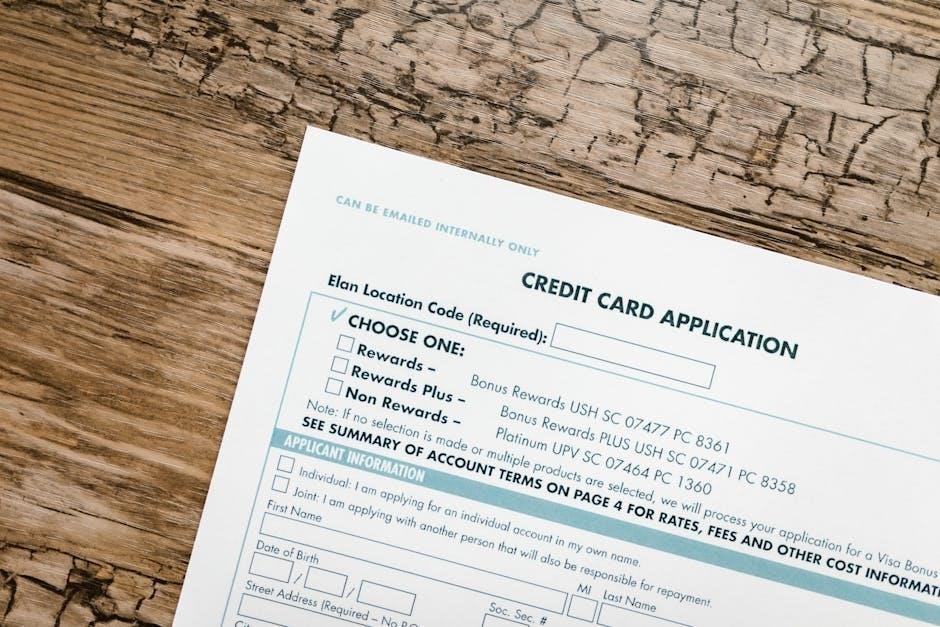
Credit Limit Request & Terms of Sale
A crucial section of any new customer credit application PDF is the credit limit request. Applicants must clearly state the credit line they require, often accompanied by a justification explaining their business needs and anticipated purchasing volume. This justification aids in risk assessment.
Alongside the request, the form must prominently display the terms of sale, including payment terms (e.g., Net 30, Net 60), late payment penalties, and any applicable interest charges. These terms should be consistent across all invoices;
The customer’s agreement to these terms, often through a checkbox or signature, is legally binding. The PDF should explicitly state that invoice terms supersede any previously discussed arrangements, ensuring clarity and preventing disputes.
Understanding Credit Limit Justification
The credit limit justification section within a new customer credit application PDF is paramount for informed decision-making. It moves beyond a simple number request, demanding insight into the applicant’s financial behavior and projected needs.
A robust justification details anticipated purchase frequency, average order values, and seasonal fluctuations. Applicants should outline their business growth plans and how the requested credit line will facilitate that expansion. Providing supporting documentation, like financial statements or purchase orders, strengthens their case.
Effective justifications demonstrate a clear understanding of cash flow and repayment capabilities. Lenders assess this information to gauge risk and determine an appropriate credit limit, balancing customer needs with financial prudence.
Personal Guarantees: When are They Necessary?
Personal guarantees on a new customer credit application PDF are frequently required when a business lacks a substantial credit history or established financial standing. Startups and newly formed entities often face this requirement, as lenders seek recourse beyond the business assets.
Essentially, a personal guarantee means the business owner(s) assume personal liability for the company’s debts. If the business defaults, creditors can pursue the guarantor’s personal assets – savings, property, and investments – to recover outstanding amounts.
The necessity of a guarantee depends on the applicant’s creditworthiness and the requested credit limit. Higher limits or perceived higher risk typically necessitate a personal commitment, providing lenders with added security and confidence.
Legal Implications of Personal Guarantees
Personal guarantees, embedded within a new customer credit application PDF, carry significant legal weight. Before signing, applicants must fully understand the ramifications. These guarantees create a legally binding contract, making the guarantor personally responsible for business debts if the company defaults.
Guarantors should carefully review the guarantee’s scope, including the total amount guaranteed, any limitations, and the duration of the guarantee. Joint and several liability is common, meaning each guarantor is responsible for the entire debt, not just a proportional share.
Seeking legal counsel is crucial. An attorney can explain the terms, potential risks, and available defenses. Understanding state laws regarding guarantees and bankruptcy is also vital, as these can impact enforceability and personal asset protection.
Authorization & Signature Requirements
A complete new customer credit application PDF necessitates clear authorization and signature protocols. The application must explicitly state the applicant’s consent for credit checks and verification of provided information. A designated section for authorized signatures is paramount, clearly identifying the signatory’s role within the company – owner, partner, or authorized representative.
Increasingly, electronic signatures are accepted, offering convenience and efficiency. However, ensure compliance with e-signature laws like ESIGN and UETA. The PDF form should support secure digital signature integration, maintaining audit trails and verifying signature authenticity.
Traditional wet signatures remain valid. The application should include a dated signature line, alongside printed name and title. Proper authorization confirms the applicant’s agreement to the terms of sale and credit, establishing a legally binding contract.
Electronic Signatures and PDF Forms
PDF forms are ideally suited for incorporating electronic signatures, enhancing efficiency and accelerating the credit application process. Utilizing digital signature technology streamlines workflows, eliminating the need for physical paperwork and manual processing. Ensure the PDF software supports compliant e-signature standards like ESIGN and UETA, guaranteeing legal validity.
Secure electronic signature solutions offer audit trails, documenting signature timestamps and user identities. This provides a robust record for verification and dispute resolution. Integration with CRM or accounting systems automates data transfer, reducing errors and improving data accuracy.
When implementing electronic signatures, prioritize data security. Choose providers with robust encryption and authentication protocols. Clearly communicate acceptance of electronic signatures to applicants, ensuring transparency and compliance.
Data Security & Privacy Considerations
Handling sensitive financial information on credit applications necessitates robust data security measures. Compliance with data protection regulations, such as GDPR, CCPA, and other relevant privacy laws, is paramount. Implement encryption both in transit and at rest to safeguard applicant data from unauthorized access.
Secure document storage solutions are crucial, utilizing access controls and regular security audits. Limit access to application data to authorized personnel only. Develop a clear data retention policy, outlining how long applications are stored and when they are securely destroyed;

Transparency is key; clearly articulate your privacy policy to applicants, detailing how their data will be used and protected. Obtain explicit consent for data collection and processing, adhering to legal requirements. Regularly update security protocols to address evolving threats.
Compliance with Data Protection Regulations
Navigating data protection regulations like GDPR, CCPA, and others is vital when processing new customer credit applications. These laws govern the collection, storage, and use of personal and financial data. Ensure your PDF application form and associated processes adhere to these standards.
Obtain explicit consent from applicants for data processing, clearly outlining the purpose and scope of data usage. Implement robust data security measures, including encryption and access controls, to protect sensitive information. Provide applicants with access to their data and the ability to rectify inaccuracies.
Maintain detailed records of consent and data processing activities for audit purposes. Regularly review and update your privacy policy to reflect changes in regulations. Failure to comply can result in significant penalties and reputational damage.
PDF Form Features: Fillable Fields & Automation
Modern PDF editing software unlocks powerful features for credit applications. Fillable fields – text boxes, checkboxes, dropdown menus – guide applicants and ensure data consistency. This minimizes errors and streamlines the completion process, improving the overall customer experience.
Automation capabilities further enhance efficiency. Utilize features like data validation to enforce correct input formats (e.g., phone numbers, postal codes). Implement calculations for credit limit requests or financial ratios. Some software allows for automated data extraction and integration with CRM or accounting systems.
Consider features like scripting to create dynamic forms that adapt based on applicant responses. Digital signatures can be integrated for secure and legally binding approvals. These features reduce manual processing and accelerate the credit approval workflow.
Using PDF Editing Software

Selecting the right PDF editing software is crucial for creating and managing credit applications. Adobe Acrobat remains a leading option, offering robust features for form creation, editing, and security. Alternatives like PDFelement, Nitro PDF, and Foxit PDF provide comparable functionality at varying price points.
Key features to look for include the ability to create fillable forms, add digital signatures, implement data validation, and automate workflows. Ensure the software supports exporting data in formats compatible with your existing systems. Consider cloud-based solutions for accessibility and collaboration.
Many programs offer intuitive drag-and-drop interfaces for easy form design. Explore tutorials and documentation to maximize the software’s capabilities. Proper utilization of these tools significantly reduces manual effort and improves the accuracy of collected data.
Customization Options for Your Credit Application
Tailoring your credit application PDF to reflect your brand strengthens professional image and customer trust. Customization extends beyond simply adding your logo; consider incorporating your company colors, fonts, and overall design aesthetic. Ensure consistency with other branded materials.
PDF editing software allows for modifications to form fields, adding or removing sections as needed to align with your specific credit assessment criteria. You can adjust the layout, include specific terms of sale, and add disclaimers. Automated fields can pre-populate information, streamlining the process.

Remember to review all customizations thoroughly to ensure clarity and accuracy. A well-designed, branded application conveys professionalism and encourages complete, accurate submissions from prospective customers, ultimately aiding in informed credit decisions.
Branding and Company Information
Integrating your branding into the credit application PDF is crucial for establishing a professional and trustworthy image with potential customers. Prominently display your company logo, name, and contact details – including address, phone number, and email – on every page of the form.
Consistent branding reinforces recognition and assures applicants they are dealing with a legitimate business. Utilize your brand colors and fonts throughout the document to maintain a cohesive look. Consider adding a brief company overview or mission statement to further build rapport.
Clearly state your terms of sale, including payment terms and any associated charges, directly on the application. This transparency fosters trust and avoids misunderstandings. Ensure all company information is current and accurate to project professionalism and reliability.
Reviewing and Approving Credit Applications
Thorough review of submitted credit applications is paramount for mitigating financial risk. Implement a standardized process that includes verifying all provided information, such as business details, contact information, and financial references.
Credit scoring and risk assessment tools should be utilized to evaluate the applicant’s creditworthiness. Analyze bank and trade references to confirm financial stability and payment history. Assess the requested credit limit in relation to the applicant’s business size and financial capacity.
Establish clear approval criteria and delegate authority appropriately. Document all review steps and approval decisions for audit purposes. A well-defined process ensures consistent and informed credit granting, protecting your business from potential losses and fostering healthy customer relationships.
Credit Scoring and Risk Assessment
Effective credit scoring is vital when evaluating new customer applications. Utilize credit reporting agencies to obtain business credit reports, analyzing payment history and outstanding debts. Implement an internal scoring model based on factors like time in business, revenue, and industry risk.
Risk assessment extends beyond credit scores. Scrutinize financial statements, bank references, and trade references for inconsistencies or red flags. Consider the applicant’s industry and economic outlook, as certain sectors pose higher risks. Evaluate the requested credit limit against the applicant’s financial capacity.
A comprehensive approach combining quantitative data with qualitative insights allows for informed decisions. Regularly review and refine your scoring model to adapt to changing economic conditions and industry trends, minimizing potential losses.
Storing and Managing Completed Applications
Secure document storage is paramount for completed credit applications. Avoid storing sensitive data on local drives; instead, opt for cloud-based solutions offering encryption and access controls. Implement a robust filing system, utilizing clear naming conventions and metadata for easy retrieval.
Consider a Document Management System (DMS) to automate workflows and enhance organization. DMS platforms often integrate with PDF editing software, streamlining application processing. Ensure compliance with data protection regulations like GDPR and CCPA, establishing retention policies and secure disposal procedures.
Regularly back up your data to prevent loss from unforeseen events. Implement audit trails to track access and modifications to applications, maintaining accountability and transparency. Prioritize data security to protect both your business and your customers.
Secure Document Storage Solutions
Choosing the right storage is crucial for protecting sensitive financial data within new customer credit applications. Cloud storage providers like Google Drive, Dropbox, and OneDrive offer varying levels of security; research their encryption protocols and compliance certifications.
Dedicated Document Management Systems (DMS) provide enhanced security features, including access controls, audit trails, and versioning. These systems often integrate with PDF editing tools, streamlining workflows. Consider solutions specifically designed for financial documents, offering robust security measures.
Prioritize encryption both in transit and at rest. Implement strong password policies and multi-factor authentication. Regularly back up your data and test your recovery procedures. Ensure your chosen solution complies with relevant data privacy regulations, safeguarding customer information.
Example PDF Credit Application Form Resources
Numerous online resources offer downloadable templates for new customer credit application forms. Websites specializing in business templates, like those offering Word documents adaptable to PDF, provide basic structures. Searching “customer credit application form example” yields various options.
Consider industry-specific templates. A wholesale distributor’s form will differ from a service provider’s. Many financial institutions and credit agencies offer sample forms as guides. Version 4.3 (09/22) is an example of a readily available form.

Remember to customize any downloaded template to reflect your company’s specific requirements and legal obligations. Ensure the form includes all necessary fields for accurate credit assessment and compliance. Adapt the terms of sale to match your business practices.